
Field of Place: Sandlot Dreams at The Long Time
- Evelyn Huff

- May 19
- 6 min read
Poured by: Evelyn Huff, Landscape Design Associate & Sandlot Captain
Imagine driving out of a traffic‑filled city, watching the skyline in your rear view mirror as the buildings get shorter and farther apart. As you head east, stoplights give way to four‑way stops, the roads narrow, and wildflowers start to take back the shoulders. You make a right turn after a soft bend in the road and suddenly there it is: a hand‑built field of dreams, known to sandlot folks simply as The Long Time. Just outside the city limits of Austin, Texas, it feels like you’ve stumbled onto a secret that somehow already knows your name.
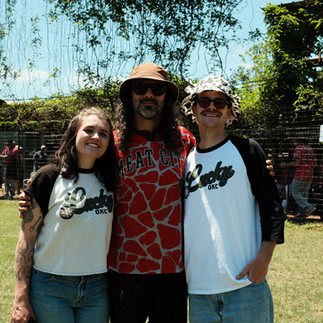
For me, arriving at The Long Time is always a collision of two big parts of my life: landscape architecture and sandlot baseball. I was there this past May with my team, The Lucky OKC, ready to play ball, but I was also there as a designer who can’t help noticing how spaces are stitched together.

(Photo of my teammate, Alex Katsion, marking our teams runs on the scoreboard.)
Why this field hits so hard for a designer and a captain
When at the longtime, I see hay bales and pallets stacked in the outfield, a chicken‑coop dugout, a short porch and wire‑spool tables, all framed by big Texas sky. It’s clear this isn’t a typical ball field, it’s a place someone has loved into existence.
Sandlot baseball has always been about more than a scoreboard. It’s pickup‑game energy grown up a bit, with better playlists and cooler uniforms. On any given weekend, you’ll find friends, families, dogs, coolers, and lawn chairs spilling out around a makeshift diamond. As a captain for The Lucky, I’ve watched our own games become little pop‑up festivals of community, people who didn’t know each other at first now show up early just to hang out. That “if you build it, they will come” feeling is very real, but it’s also very specific. I think the phrase needs a slight revision: “if you build it with care, they will feel welcome.” People come when the space feels like it was built for them.
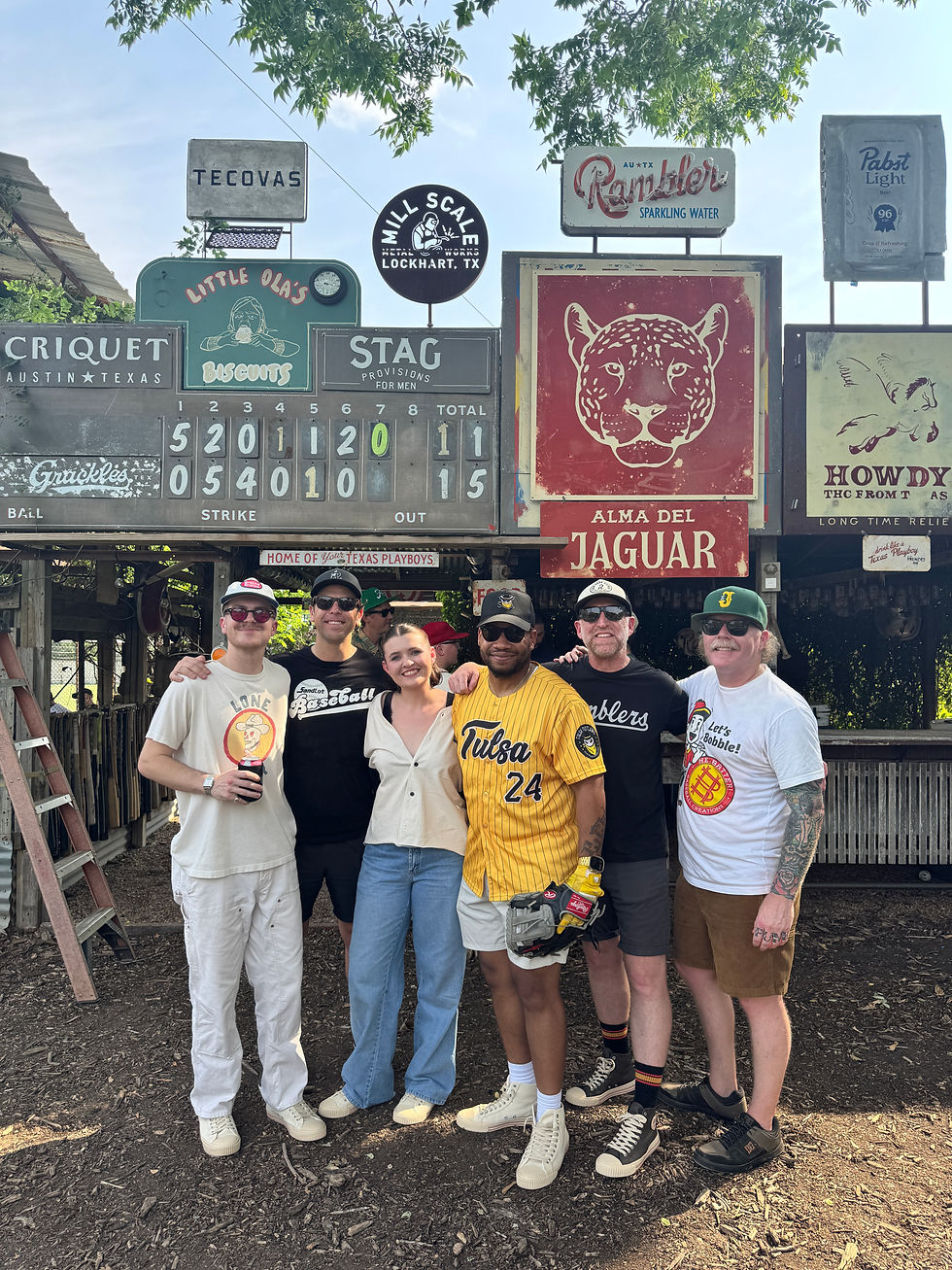
(Photo of myself and 5 other Oklahoma
sandlot captains at the longtime.)
The Long Time: A handmade ball field as landscape architecture
That’s why The Long Time grabs people so quickly. It’s a ball field, yes, but it’s also a living lesson in low‑budget placemaking. The field sits out on a floodplain, which would send many projects straight to the “not feasible” pile. Here, though, that constraint becomes part of the story. Structures are simple and sturdy. Materials are reclaimed and repurposed. The architecture feels more like a sketch than a finished rendering, but that sketch is exactly what makes space for people to fill in the details.

(Photo of our opposing team pitching, showcasing the hay bale and pallet made outfield.)
Walking around before our game, I noticed how thoughtfully the basics of comfort and gathering were handled. There are places to sit and lean, to stand in the shade and still feel connected to the action. Edges are layered: hay bales, fences, bleachers, porches, all creating different perches for different types of spectators. You can press right up to the backstop with your scorebook, or you can drift back under a structure and let the game be your soundtrack. As someone in landscape architecture, I talk a lot about edges, thresholds, and “desire paths.” Here I was, literally walking them in my P.F. Flyers. (Run faster, jump higher, right?)
What makes it special isn’t an expensive list of amenities; it’s how the essentials are met with creativity and care. Shade is handled with trees, small umbrellas, and simple roofs, not elaborate canopies. Wayfinding is a mix of instinct and small, human gestures: a path worn into the grass, a painted sign, a line of string lights guiding you toward the heart of the site. The materials might be humble, but the intent is not. Everything quietly says,“We knew you were coming, and we’re glad you’re here.”
Designer note 1: Edges that invite, not divide
I love how The Long Time uses hay bales, fences, and bleachers to create soft edges instead of hard barriers. Those edges give people choices (front‑row rail leans, shady hang‑back spots, kid‑friendly corners) without ever making anyone feel like they’re on the wrong side of the fence. In our work at CDC, we try to do the same: use edges to invite people in and give them options, not to box them out.
Designer note 2: Comfort from simple ingredients
Nothing at The Long Time feels over‑designed, but the basics of comfort are dialed in. Shade comes from trees, umbrellas, and small roofs; seating is a mix of bleachers, moveable chairs, and anything sturdy enough to lean on. It’s a good reminder that comfort isn’t about luxury finishes, it’s about paying attention to sun and wind, views and distances, and how long people might want to stay! Those are the same questions we like to bring to a downtown streetscape or even a neighborhood park.
Designer note 3: Reuse as a storytelling tool
The reclaimed materials don’t just save money; they tell you something about the place. A chicken‑coop dugout, pallet fences, wire‑spool tables, railroad tie edging: every piece has a bit of backstory baked in. In landscape architecture, we talk about “sense of place” all the time, and here it literally shows up in the details. Reuse becomes a language, not a compromise, and visitors feel like they’re stepping into an evolving story rather than a finished product.
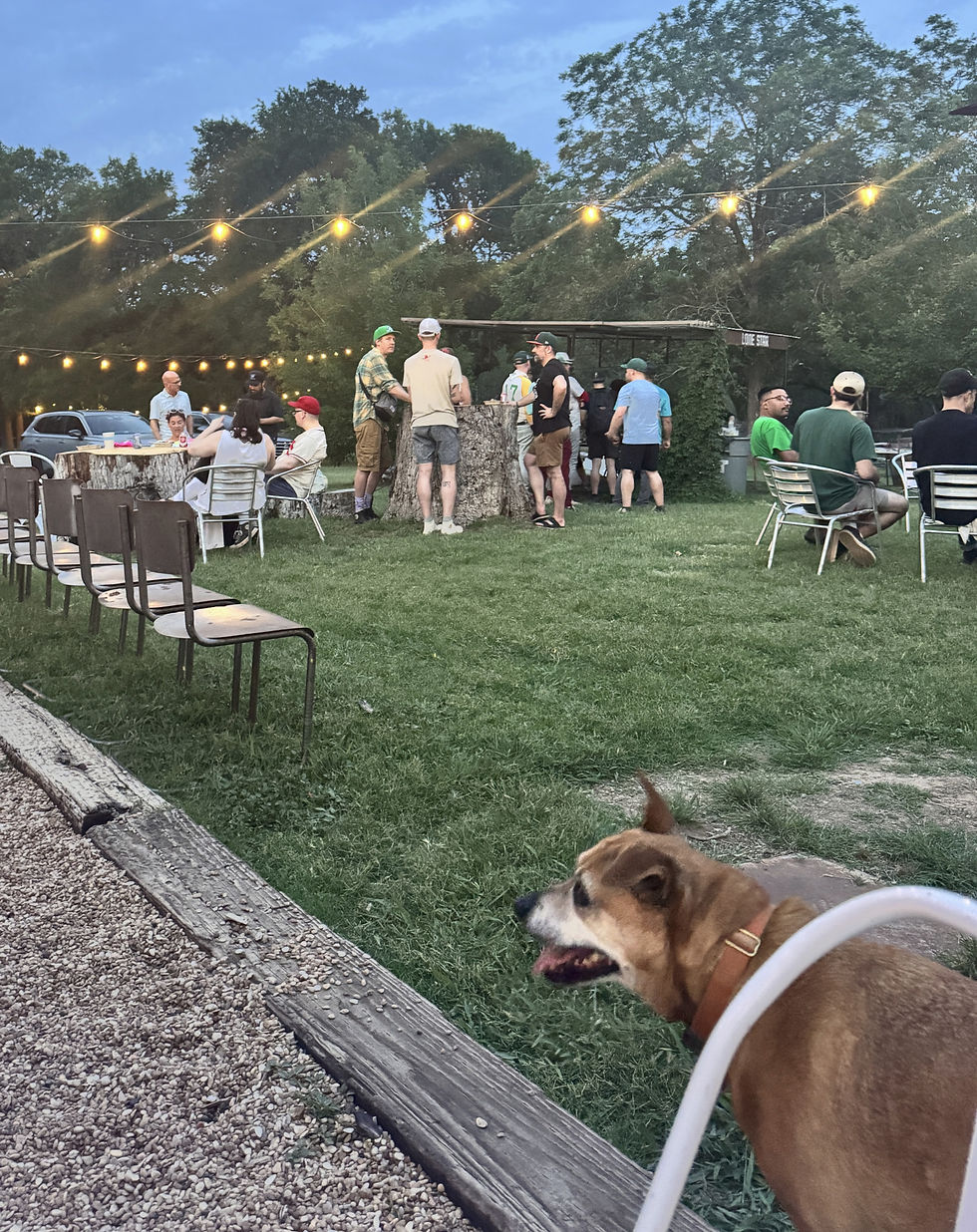
(Photo during the sandlot summit at the Longtime, an event where we had teams
from all over the U.S. Showing how people used the moveable seating and even
tree stumps as gathering places.)
Sandlot as community infrastructure
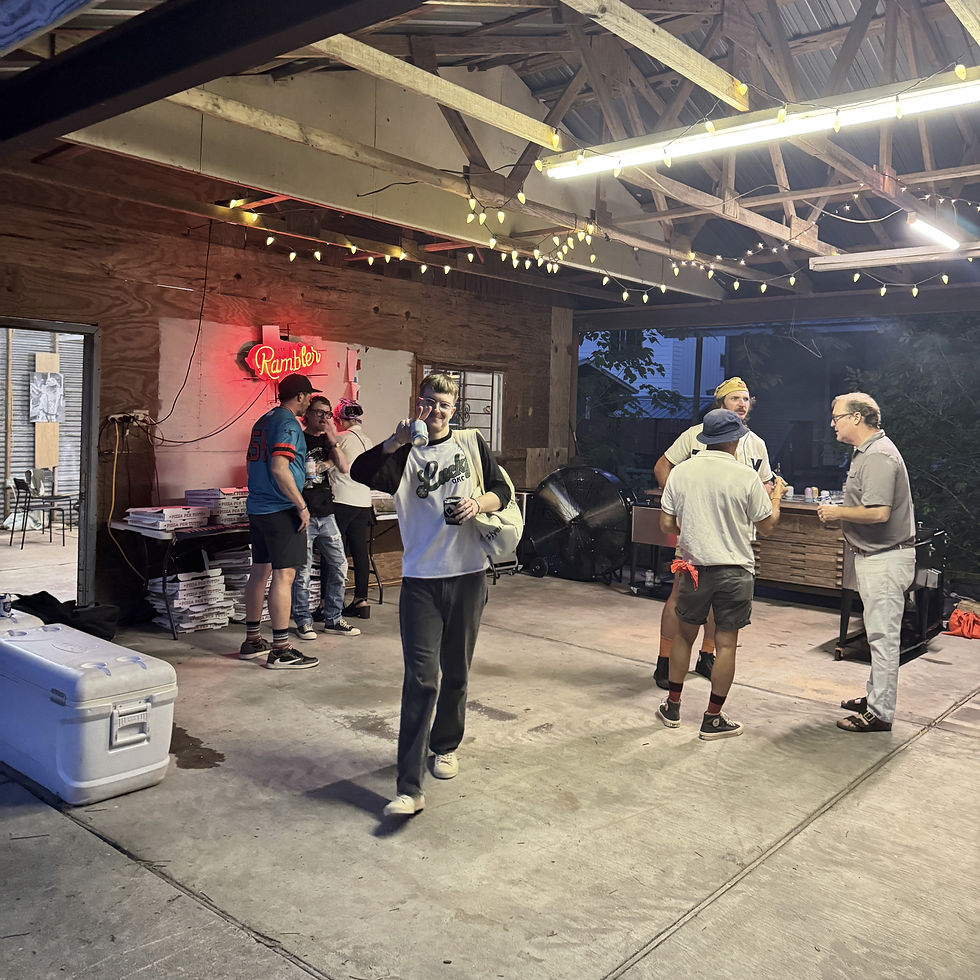
That same spirit shows up a few minutes down the road at my friend Howard Carey’s place, which he calls The Meantime. It’s a batting cage tucked into a barn‑like structure in his backyard, about fifteen minutes from The Long Time, with a pavilion nearby and a fridge stocked for a rotating cast of shared beverages. Just like The Long Time, it quietly invites people to linger. Take a few swings, sit in the shade, crack open something cold, and stay for one more conversation. It’s another example of how a simple, well‑loved space can weave community together.
(Photo of my partner and co-captain at the Meantime.)
That’s the kind of design thinking I try to bring into my own work back home in Oklahoma City. I spend my weekdays working on parks, plazas, and public spaces, places meant to hold people’s everyday rituals and special occasions. On weekends, I watch those same principles play out in real time on baseball fields: how people cluster in the shade, how kids claim the safest corners, how a simple bench or railing changes where people linger. Standing at The Long Time, I could feel those worlds overlapping. This field was a studio project made real, a test site for ideas about belonging, comfort, and play.
Sandlot culture itself feels like community infrastructure in disguise. Teams travel, friendships form, and little ecosystems of mutual support pop up around each field. When our team drove down from OKC to Austin, it wasn’t just for a game, it was to plug into a wider network of people who share this love of baseball, community, and place. You feel it in the small interactions: swapping stories about home fields, trading merch, inviting each other to future games in different cities. The fields become anchors in that network, each with its own personality and set of rituals.

(Photo of from our game on May 3rd.)
A living field, a living practice: Carrying The Long Time home
What I carried home from The Long Time lives somewhere between design notes and daydreams. I kept thinking about how we could borrow that same spirit of resourceful placemaking for our own spaces: more hand‑painted signs, more simple edges to sit on, more shade created with whatever we have, more room for the community to “finish” the design with their presence and their stuff. It reminded me that you don’t need a huge budget to make a place feel special. You just need to care enough to notice how people actually use it and then design in response.
I left that field dusty, tired, and full of ideas. As the sun dropped and we packed up the car, I took one last look back at the big sign, the lights, the silhouettes of people still lingering even after the last out. It felt less like we had visited a ball field and more like we’d been welcomed into someone’s ongoing experiment in how to hold people well. That’s the kind of “field of dreams” I want to keep chasing, as a designer, as a sandlot captain, and as someone who believes that community really is everything.









So if you’re reading this and thinking, “Wow, that sounds special,” come to a sandlot game (or any game or even a park) and try to look at the space with a designer’s eye. I think you’ll find, all around you, simple, human‑centered placemaking quietly doing its job.
Thanks for sharing this LATTE break with me—here’s to home runs, summer shade, and laughs in the dugout.


Comments